
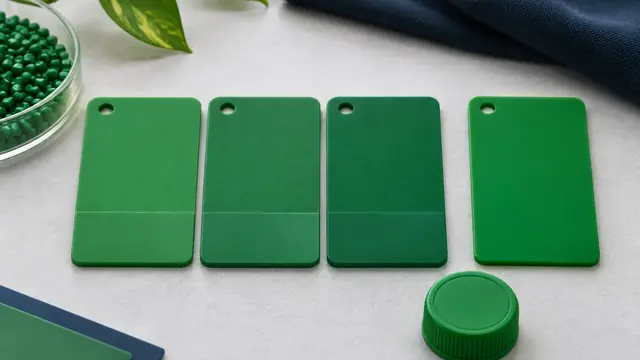
Before a colour trial begins, ask a simple question: what exactly are we trying to match? A photograph of a green cap is useful for starting the conversation. For approval, the buyer and supplier need an agreed reference and a clear description of the finished product.
This small step gives the next sample a defined target. It also makes feedback more useful than a message saying the colour is almost right.
Give the reference an identity
If the project starts with a colour code, record the system and exact reference. If it starts with a physical part or plaque, give that sample an ID and record who supplied it. Check that it is clean and representative; light, heat and ageing can change a physical standard.
Keep the approved reference available for later comparisons. Where a spectral colour standard is used, agree on that data and the relevant measurement conditions too. A photograph or screen preview can communicate the design direction, while the approval record should identify the agreed standard.
Describe the plastic part
Include the polymer and exact resin grade, production process, intended masterbatch addition rate and finished thickness. State whether the appearance should be opaque, translucent or transparent, and describe the required gloss or texture. A smooth sample plaque and a textured production part can look different even when their basic colour is close.
Also record relevant end-use requirements before the trial, such as outdoor exposure or applicable contact restrictions. These need their own technical review; a satisfactory colour match does not establish suitability for every use.
Agree how the sample will be assessed
Place the trial sample beside the reference under the agreed lighting. Keep the presentation and viewing conditions consistent. Include lighting relevant to where the product will be seen or used, rather than relying on whichever lamp happens to be available.
Agree the acceptance criteria with the customer. When a numerical colour difference is used, record the calculation method and measurement setup alongside the agreed limit. A single universal acceptance number is not appropriate for every product.
Keep the approval with the trial
Record the sample ID, reference ID, resin, addition rate, trial conditions, observations and approval decision together. Retain the approved sample so the next discussion starts from the same point.
For a colour enquiry, send Dibachem your reference, polymer and production process through our contact page. Include the part thickness and intended use so the discussion starts with the details that matter.