
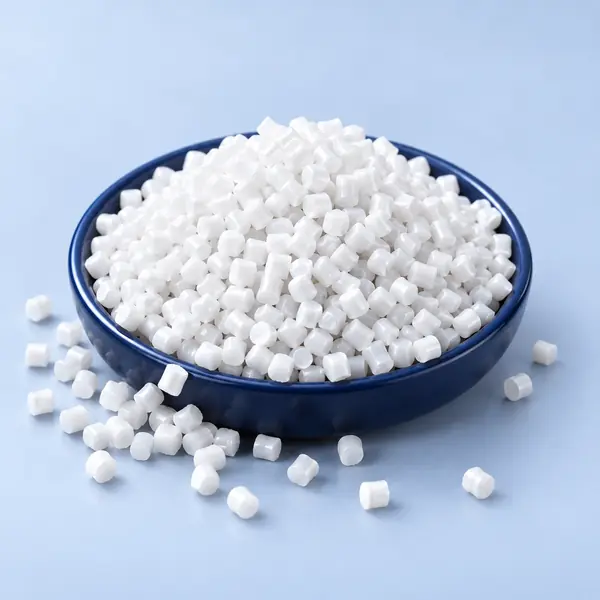
White masterbatch is used to introduce a white appearance and build the required level of opacity. The result depends on the base resin, pigment system, addition rate and the amount of material through which light travels. A thin film and a thick moulding should therefore be assessed on representative samples.
A useful brief describes the white you want to see: warm or cool, opaque or more translucent, glossy or matt. Share the reference and the process with Dibachem so the discussion can focus on the finished appearance rather than the colour of the concentrate alone.
Compare at the real thickness
Use the intended film gauge, wall thickness or fibre specification when comparing samples. A change in thickness can change the apparent whiteness and opacity. Compare against the same background and under consistent lighting so the result is useful for the way the product will actually be viewed.
Match appearance with processing
The carrier must suit the resin and process. In fine fibres and lightweight nonwovens, dispersion and filtration deserve particular attention. In film, review surface quality and any effect on the required optical properties. In moulding, look at colour across different wall sections, ribs and textured surfaces.
Agree what a good sample means
Keep an approved reference and agree which observations will be recorded during the trial. These can include shade, opacity, surface defects and processing stability. Where the end use needs particular documentation, identify it early and request information for the proposed grade before approval.
A practical trial checklist
- Required white tone and opacity
- Actual thickness, resin and surface finish
- Dispersion and process-specific filtration
- A consistent sample and viewing method
Let’s discuss your application
Include the resin, process, target thickness, white reference and current addition rate if available. Tell us whether the priority is coverage, a particular shade, translucency or another visible feature of the finished product.
Send your requirements